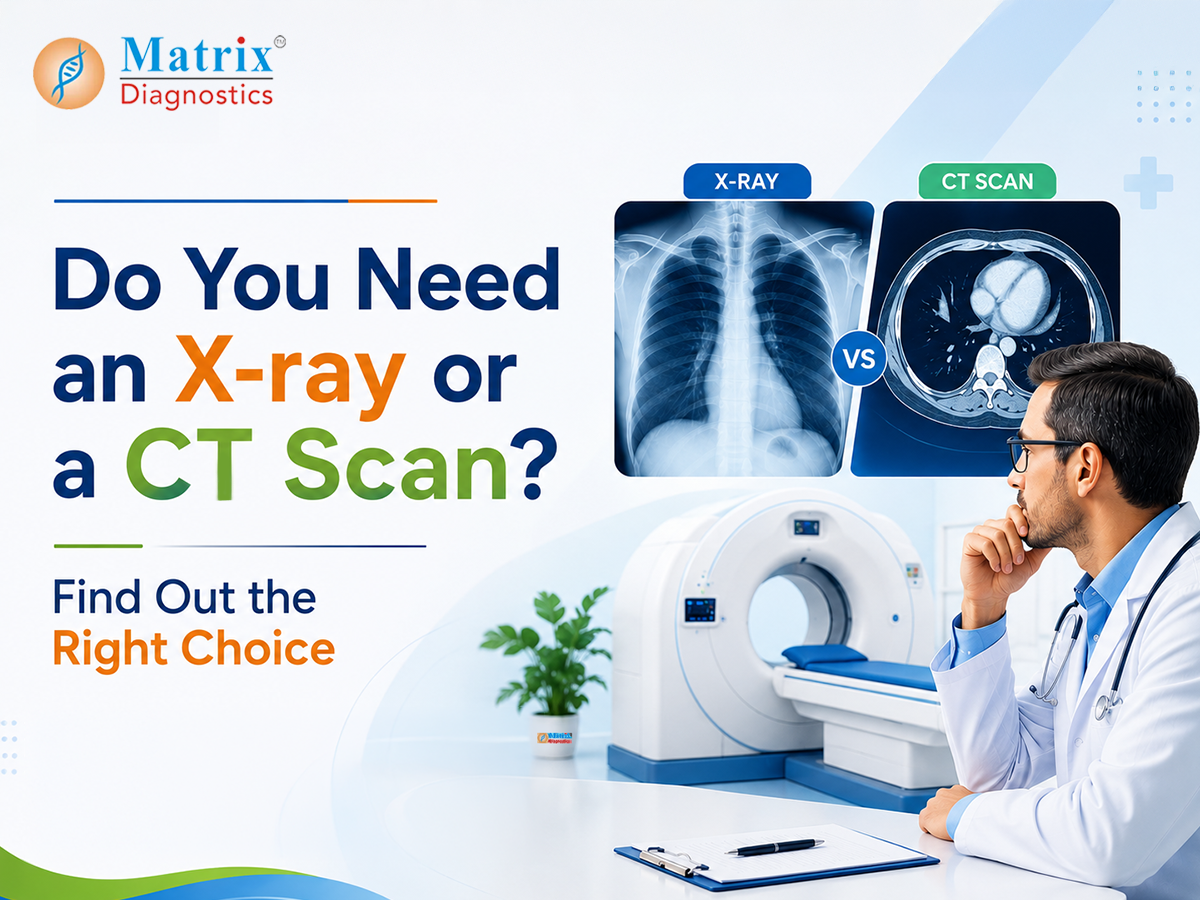
Do You Need an X-ray or a CT Scan? Find Out the Right Choice
- Home
- blogs
- Do You Need an X-ray or a CT Scan? Find Out the Right Choice
Determining whether an X-ray or a CT scan is needed depends on the clinical scenario. X-rays are effective for evaluating bone fractures and certain chest issues, providing quick imaging with lower radiation exposure. In contrast, CT scans excel in complex diagnoses, offering detailed three-dimensional views of internal anatomy, particularly for soft tissues. Understanding these differences is essential for ideal patient outcomes. Consulting providers of diagnostic services in Hyderabad can help patients receive the most appropriate imaging test based on their symptoms and medical needs. Further exploration reveals more insights about the specific applications and benefits of each imaging modality.
Understanding X-rays: What They Are and When to Use Them
X-rays are a form of electromagnetic radiation that can penetrate soft tissues, allowing for the visualization of internal structures within the body. Common x-ray types include conventional radiography, computed radiography, and fluoroscopy. Each type serves specific diagnostic purposes, facilitating the assessment of bone fractures, dental issues, and certain organ conditions. X-ray safety is paramount; minimizing exposure is essential to reduce potential health risks. Technological advancements, such as digital x-rays, have helped decrease radiation doses while maintaining image quality. Patients should be informed about the necessity of the procedure and any associated risks. Understanding the appropriate applications of x-ray imaging empowers patients to make informed decisions regarding their healthcare options while ensuring ideal safety measures are in place.
Exploring CT Scans: Features and Benefits
Computed Tomography (CT) scans represent a significant advancement in medical imaging, offering detailed cross-sectional views of the body that X-rays cannot provide. This sophisticated CT technology utilizes a rotating X-ray device and advanced computer processing to generate high-resolution images, enabling healthcare professionals to visualize internal structures with remarkable clarity. The scan advantages of CT include the ability to detect a wide range of conditions, from tumors to internal injuries, with speed and accuracy. Additionally, CT scans can be performed rapidly, making them invaluable in emergency settings. Specialized facilities such as a cardiology diagnostic center may also use advanced imaging techniques to evaluate heart-related conditions with greater precision. With their three-dimensional imaging capability, CT scans enhance diagnostic precision, ultimately facilitating informed treatment decisions. These features underscore the critical role CT scans play in modern medical diagnostics.
Key Differences Between X-rays and CT Scans
While both X-rays and CT scans serve essential roles in medical imaging, they differ markedly in their methodology and the information they provide. X-rays utilize a single beam of radiation to create two-dimensional images, primarily revealing bone structures and certain soft tissues. In contrast, CT scans employ advanced imaging technology to generate cross-sectional, three-dimensional images, offering a more thorough view of internal anatomy. This difference in imaging capability often leads to enhanced diagnostic accuracy for complex conditions. Additionally, radiation exposure levels vary, with CT scans typically delivering a higher dose due to multiple rotations around the body. Understanding these key differences is vital for healthcare professionals and patients when determining the most appropriate imaging modality for specific medical needs.
Making the Right Choice for Your Diagnosis
Choosing the appropriate imaging modality for diagnosis involves careful consideration of the clinical scenario and the specific information required. The decision between an X-ray and a CT scan hinges on factors such as the desired diagnostic accuracy and the nature of the suspected condition. X-rays are typically sufficient for evaluating bone fractures or certain chest issues, providing quick imaging with lower radiation exposure. In contrast, CT scans offer detailed cross-sectional images, making them indispensable for complex diagnoses, particularly in soft tissues and internal organs. In addition, laboratory support from a bio chemistry center can complement imaging findings by providing valuable diagnostic information through blood and other laboratory tests. Understanding the strengths and limitations of each imaging technology is essential for healthcare providers to optimize patient outcomes, ensuring that the selected modality aligns with clinical needs and enhances diagnostic precision.