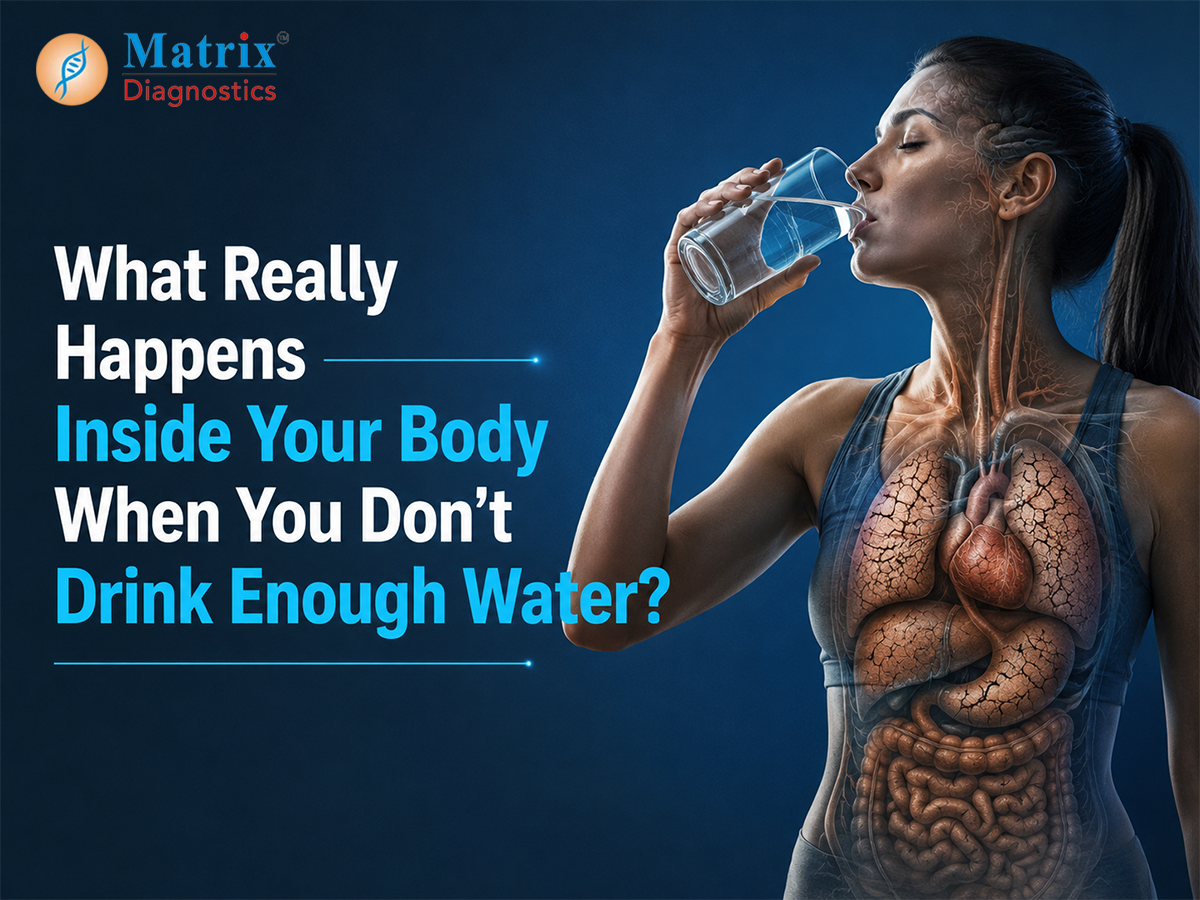
What Really Happens Inside Your Body When You Don’t Drink Enough Water?
- Home
- blogs
- What Really Happens Inside Your Body When You Don’t Drink Enough Water?
When you don’t drink enough water, your body experiences various adverse effects. Dehydration impairs cognitive functions such as attention and memory, and slows reaction times. It also disrupts digestive health by compromising the breakdown and absorption of nutrients. Kidney function may be impaired with an increased risk of stone formation due to concentrated urine. Additionally, inadequate hydration strains the cardiovascular system by increasing blood viscosity and heart rate. Visiting the best diagnostic centre in Hyderabad can help identify dehydration-related health concerns through appropriate laboratory tests and health evaluations. Understanding these impacts provides insight into the essential role of water in maintaining overall health.
The Impact of Dehydration on Brain Function
Dehydration considerably impairs cognitive functions, affecting the brain’s ability to process information efficiently. Studies have shown that even mild dehydration can lead to cognitive decline, including reduced attention, impaired memory, and slower reaction times. These effects can compromise decision-making and problem-solving abilities, essential for individuals who value freedom and autonomy in managing their daily activities and long-term goals. Additionally, dehydration has been linked to mood swings, exacerbating feelings of frustration and irritability that can further hinder an individual’s capacity to function effectively. By maintaining adequate hydration, one can preserve mental acuity and emotional stability, thereby enhancing their freedom to engage effectively and constructively in their pursuits and interactions. If persistent symptoms require further evaluation, visiting the best radiology lab in Hyderabad along with appropriate diagnostic services can help support a comprehensive medical assessment.
Effects on Digestive Health and Metabolism
While often overlooked, adequate water intake is essential for maintaining ideal digestive health and metabolic function. Optimal hydration levels facilitate the enzymatic processes necessary for breaking down food, allowing for efficient nutrient absorption. When water intake is insufficient, the body struggles to dissolve and transport these nutrients effectively, leading to suboptimal digestion and potential nutrient deficiencies. Additionally, hydration plays a vital role in maintaining the mucosal lining of the gastrointestinal tract, which protects against harmful bacteria and toxins. Dehydration can compromise this protective barrier, increasing vulnerability to digestive disorders. Moreover, water is pivotal in metabolism, assisting in the thermogenic process and energy production. Ensuring proper hydration is therefore critical for both digestive health and overall metabolic efficiency. For advanced health evaluations and specialized testing, consulting a top molecular biology diagnostic center in Hyderabad can provide deeper insights through precise diagnostic approaches.
Kidney Function and the Risk of Stone Formation
Adequate hydration greatly influences kidney function and reduces the risk of kidney stone formation. When the body is properly hydrated, the volume of fluids passing through the kidneys increases, enhancing kidney filtration. This process effectively dilutes the concentration of minerals and salts, which are precursors to stones, thereby aiding in stone prevention. Conversely, insufficient water intake leads to decreased urine production. As a result, urine becomes more concentrated with higher levels of calcium, oxalate, and uric acid, considerably elevating the risk of crystallization and stone formation. Maintaining ideal hydration is essential for facilitating the renal clearance of solutes and minimizing the potential for stone development, underscoring the fundamental role of water in kidney health and function.
Cardiovascular Consequences of Reduced Hydration
Reduced hydration levels can greatly impact cardiovascular health, particularly through the modulation of blood volume and blood pressure. When the body lacks adequate water, blood volume decreases, leading to thicker blood and increased blood viscosity. This heightened viscosity demands more effort from the heart to pump blood, consequently elevating heart rate. Over time, persistent dehydration can strain the cardiovascular system, potentially elevating the risk of hypertension and other heart-related disorders. Scientific studies underscore that maintaining ideal hydration is essential for sustaining normal blood pressure and heart function. Individuals should prioritize adequate fluid intake to safeguard their cardiovascular integrity, promoting a state of health that supports freedom from disease and the ability to pursue an active, unencumbered lifestyle.